


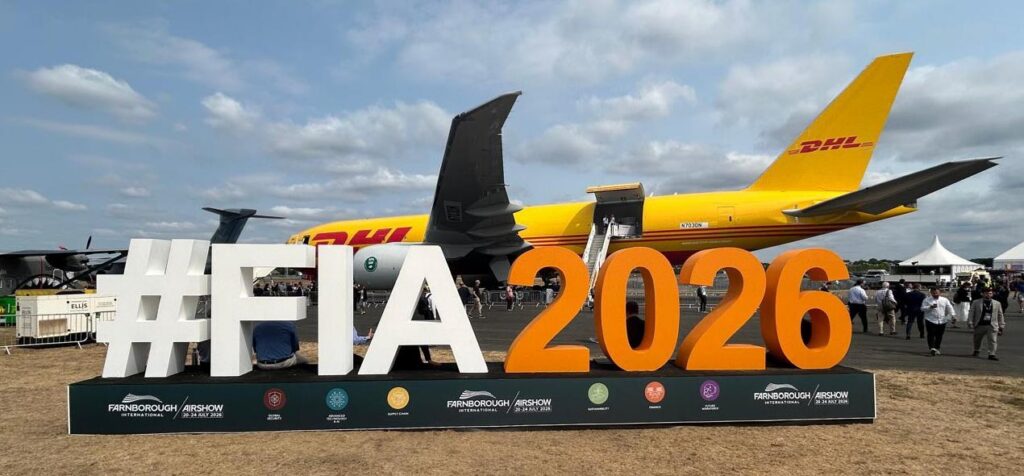
A day at Farnborough International Airshow 2026
Farnborough International Airshow is one of the world’s largest Airshows drawing the global aerospace community together. It was an extraordinary experience to be at the centre of innovative displays and bold new aircraft. The day blended learning from experts who explained technical concepts in accessible terms with an airshow showcasing what some of these state-of-the-art planes could do up in the sky.
The team was at Farnborough for a full four days this year – Monday 20 to Thursday 23 July 2026 – connecting with clients, industry partners, and the wider aviation aerospace and defence community.

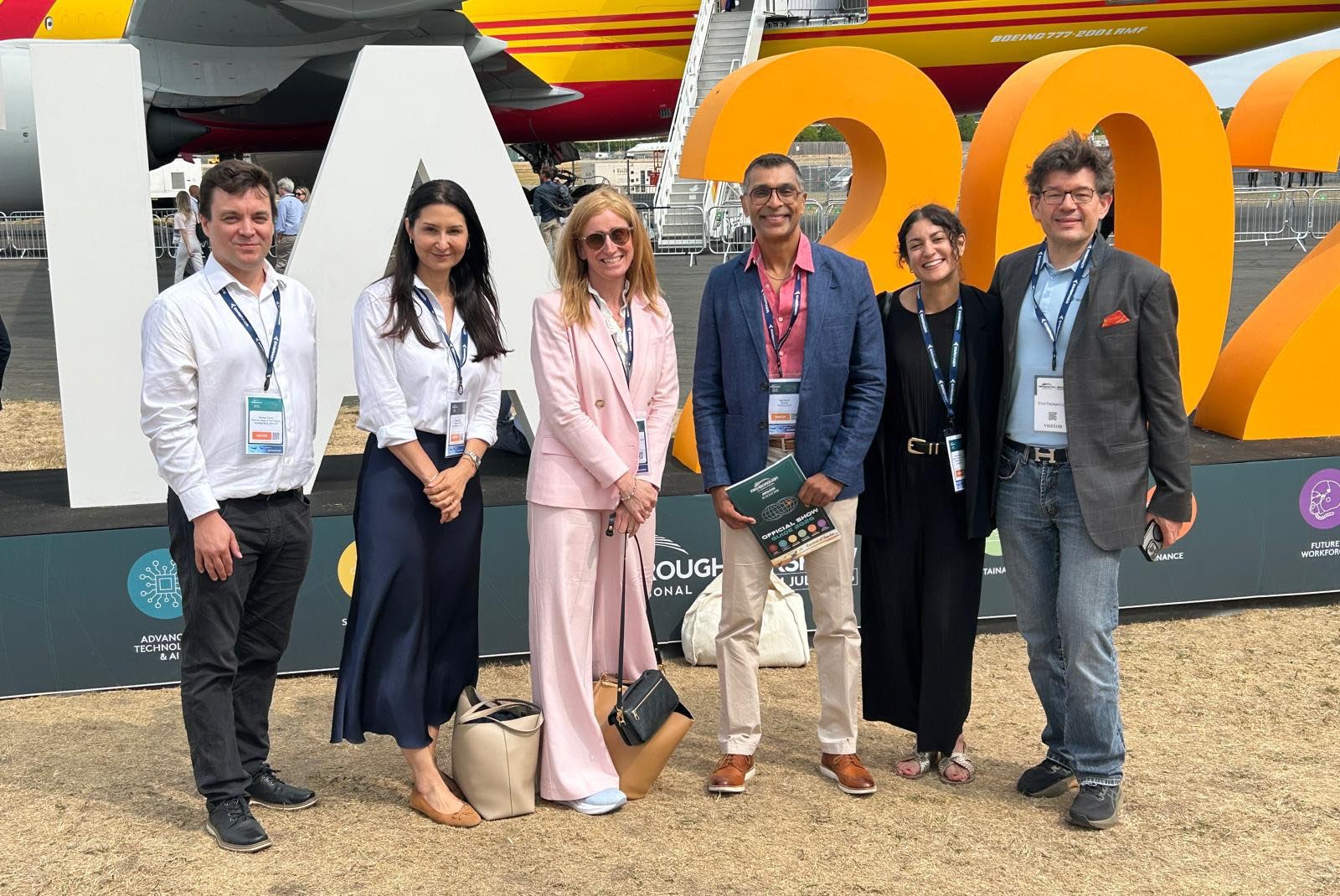
The Global Gowling WLG AAD team at Farnborough, pictured in front of the Czech Air Force’s L-159 ALCA on static display.
On the ground
I arrived on Wednesday when the gates opened and met Peter Newsbitt (fellow trainee solicitor). We spent the morning walking around the outdoor exhibits, talking to the engineers on the ground and exploring the aircraft. My interest in the AAD sector stems from my time at university, where I lived with seven aerospace engineers and heard extensively about fighter jets, missiles, radar systems, and propulsion technology, which naturally developed an interest in the sector. Bringing the concepts that I had heard about over the dinner table and more recently throughout my time in the AAD sector seat to life was remarkable.
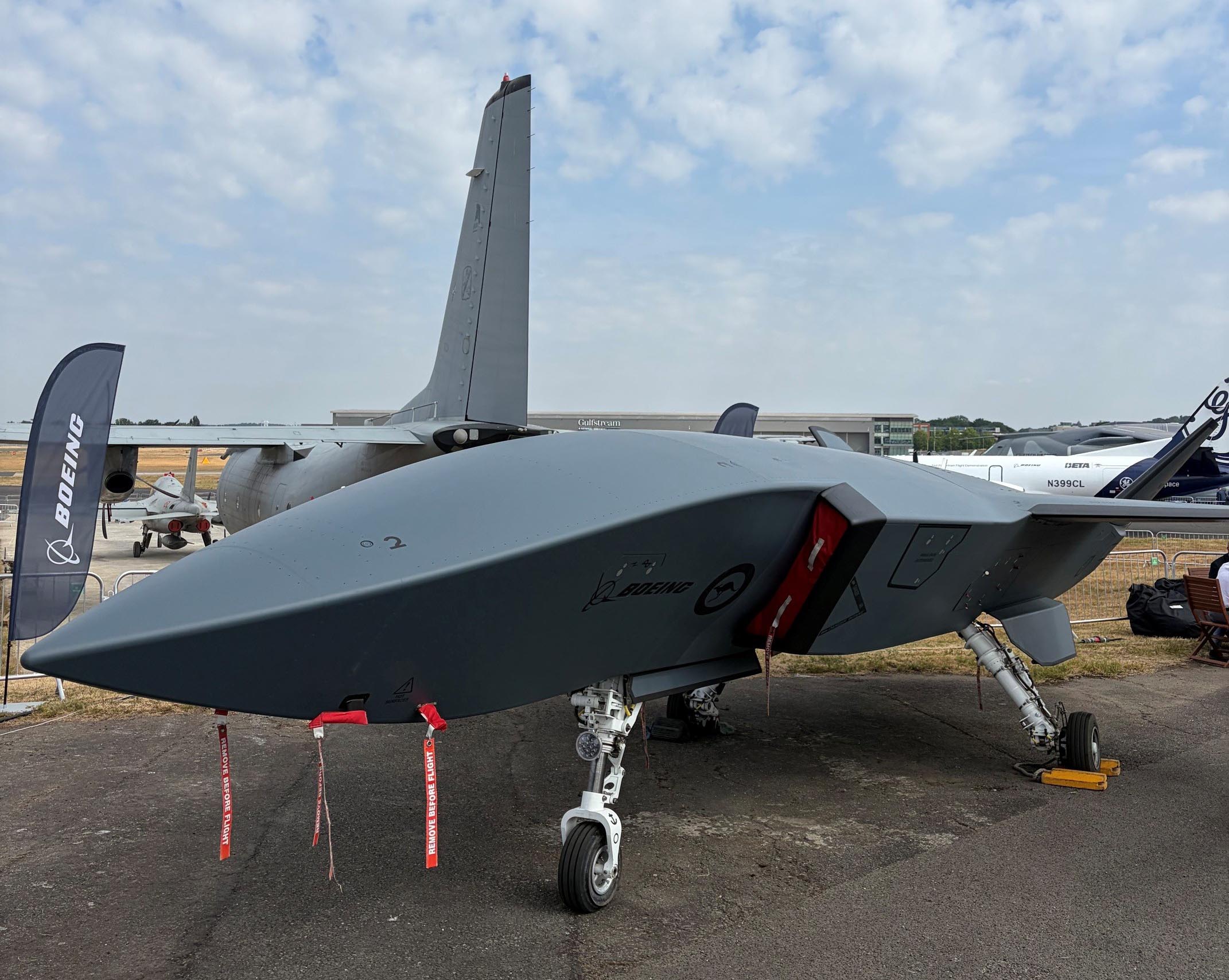
I made sure to talk to the engineers at many stands to further expand my learning about the challenges and opportunities facing the sector. As was expected, one of the most predominate themes was the incorporation and constant evolution of artificial intelligence. We learnt the extent to which it helps teams design aircraft faster and anticipate maintenance needs. A conversation with Boeing made the shift clear when their engineers described sensors that can identify other aircraft in real time. Our takeaway was that AI is moving from the background into the heart of aviation and defence and that these shifts are immediate rather than theoretical.

Elsewhere on the static line, we stopped by the Embraer stand and spotted the Czech Air Force’s JAS-39 Gripen. At the Belgian Aerospace pavilion, we had one of the morning’s most interesting conversations, with representatives from MBDA, Europe’s largest missile systems company, jointly owned by BAE Systems (UK), Airbus (France), and Leonardo (Italy). Three nations pooling defence technologies in one enterprise: a vivid reminder of how collaborative and geopolitically significant this industry can be.
Inside the cockpit
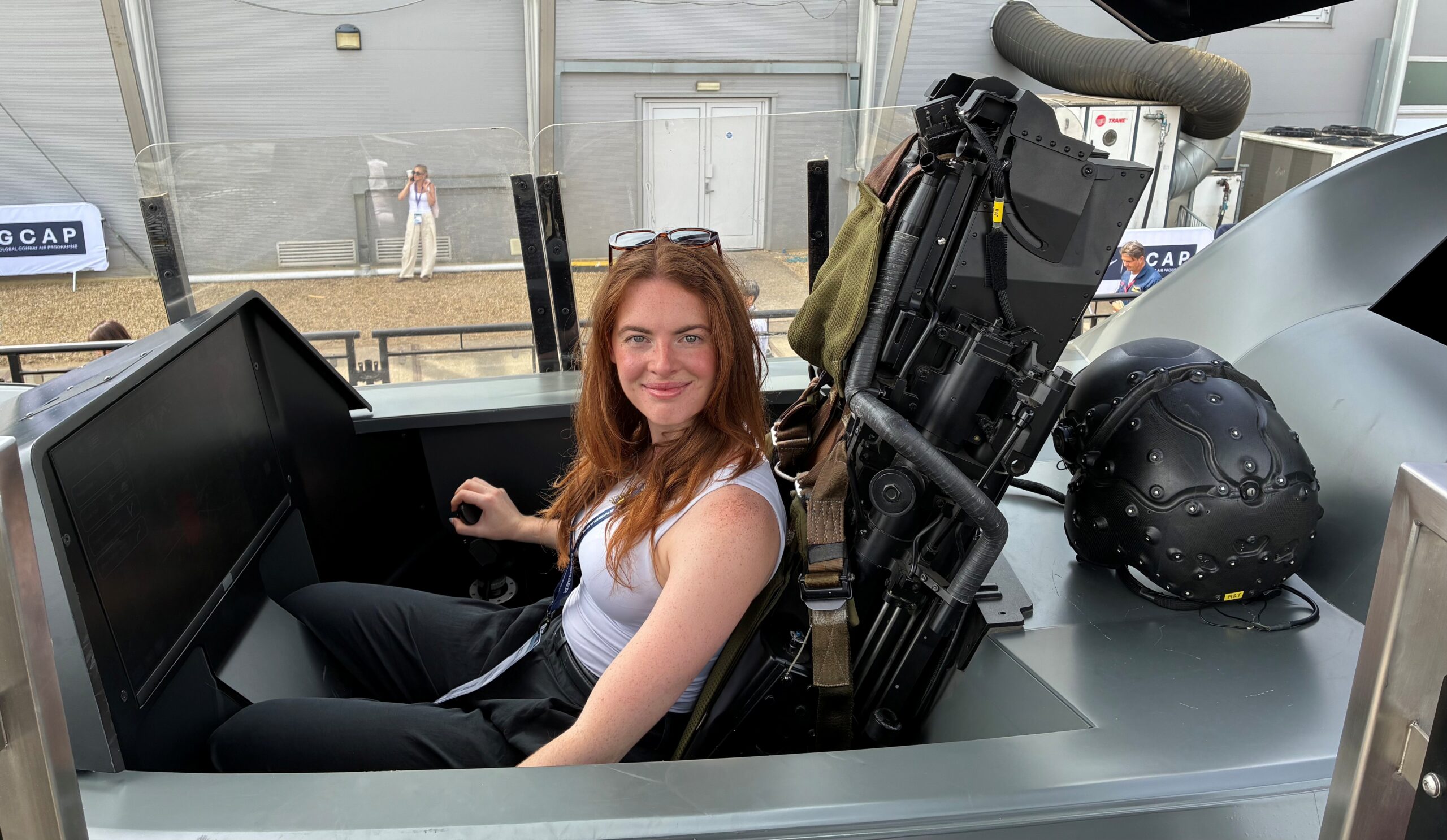
I was then able to sit inside the GCAP cockpit demonstrator, which made for a real-life futuristic experience. The UK, Italy, and Japan are developing this next-generation fighter together, and the cockpit offered a vivid look at how pilots may work with its systems. Surrounded by wide screens and controls, it was easy to imagine the aircraft in action and to see how quickly the boundaries of flight are moving.

Eyes on the sky
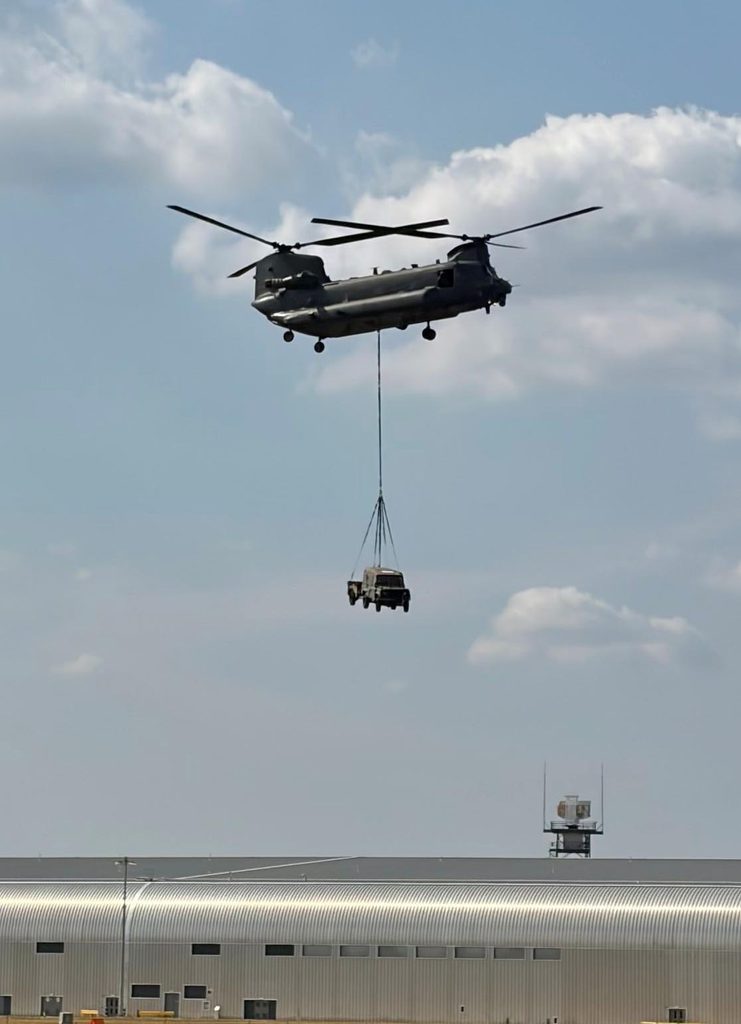
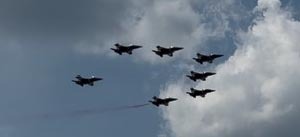
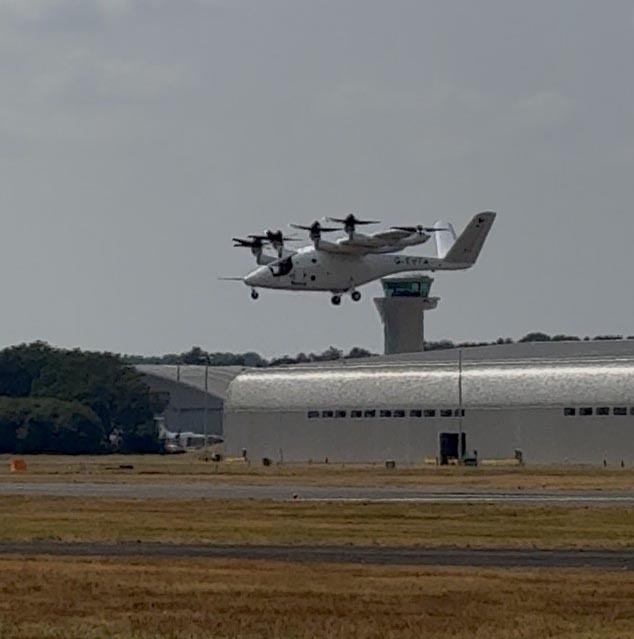
The team regrouped at lunch just before the flying display began, when everyone’s eyes turned to the sky. The US Air Force F-35A Lightning II cut across with startling power and precision, its only public display in Europe this year. Then the mood shifted: Vertical Aerospace’s VA-1X electric aircraft moved quietly and deliberately, offering a glimpse of a cleaner, more sustainable future. The display ranged from the tight formations of Fursan Al Emarat to the Chinook’s low-altitude manoeuvres which made everyone get their phones out and record, followed by the sweeping presence of an Italian Eurofighter Typhoon. But the standout contrast was above us: a fifth-generation fighter sharing the sky with all-electric aircraft designed for greener regional travel. Old and new were not competing for attention; they were appearing together, showing just how broad aviation’s next chapter could be.



Inside the halls
In the afternoon we went into the exhibition halls. We spent a good amount of time at the BAE Systems stand, where they had just unveiled Brontanax, the UK’s first autonomous uncrewed combat aircraft, designed to operate alongside fighters like Typhoon at a fraction of the cost. Backed by £300 million of government investment and expected to fly by late 2027, it was the main announcement of the week. BAE also showed Project Intuity, a next-generation pilot helmet that uses AI to project battlefield information directly onto the visor, helping pilots understand what is happening without looking away. Both displays brought home how quickly these technologies are moving from concept to reality.
The Bigger Picture
Farnborough highlighted how the industry is constantly in motion. AI is changing how aircraft are designed and used; sustainability is shaping what comes next; and geopolitics is influencing the partnerships and choices behind the scenes. Events like this make those forces visible and offer a glimpse of where aviation, aerospace, and defence are heading. And ultimately, it is really something to see some of the most advanced technology we have performing manoeuvres so close to you up in the air – a real-life Top Gun moment.
Get involved
Interested in hearing what’s next for the AAD team? Contact Dawn Beddard or Elizabeth Williams for more information on how to get involved in the sector and upcoming events.

