|
Getting your Trinity Audio player ready...
|
Last week saw legal professionals from across the life sciences community meet in Amsterdam for the Kisaco Pharma & Biotech Patent Litigation Europe Summit. As one of the key annual industry events in this area, the summit brings together in‑house counsel, specialist litigators, and the judiciary to explore the IP issues shaping the life sciences ecosystem. With the Unified Patent Court (UPC) enjoying widespread uptake and playing a critical role in the future of patent litigation strategies, this year’s discussions felt particularly forward-looking.
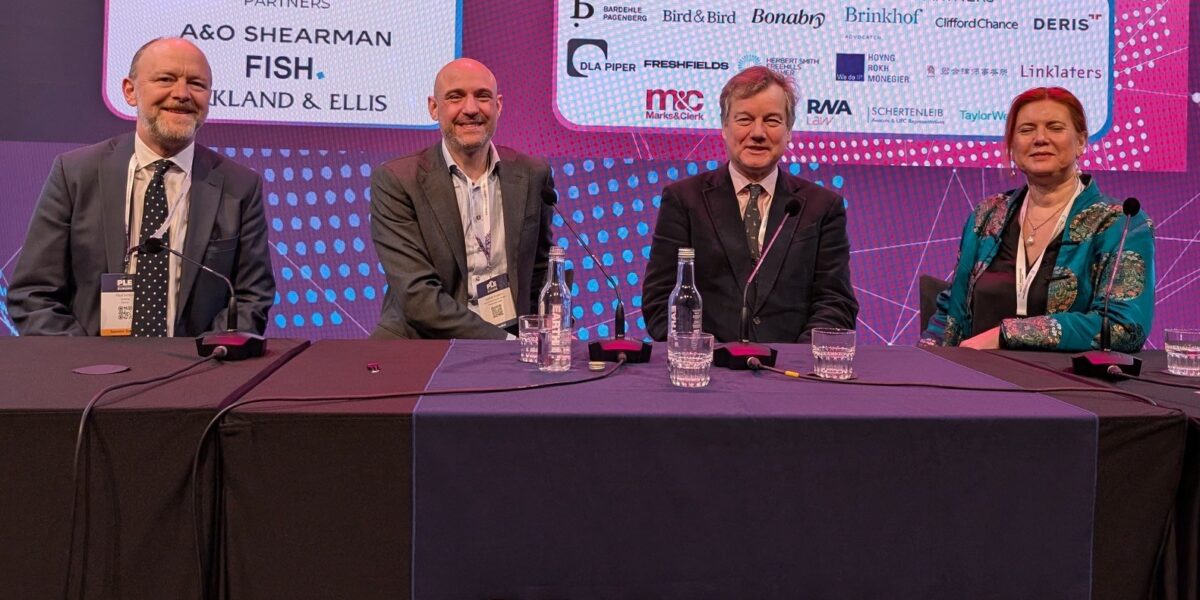
I was delighted to join the line‑up of speakers once again, and this time I had the pleasure of moderating a judicial roundtable, featuring judges from the UK Court of Appeal, the Harju County Court in Estonia and judges from the central division (Munich) and Baltic regional division of the UPC. I am very grateful to Sir Colin Birss, András Kupecz and Kai Härmand for their participation. Their collective experience, spanning both national systems and the UPC, offered a rare and valuable perspective on how patent litigation strategy is evolving across Europe and invaluable practical tips for practitioners and clients across the continent.
The UPC: a brief backdrop
Now well into its third year, the UPC is becoming an increasingly influential forum for pharmaceutical and biotech disputes. A theme of the summit was that the UPC has seen more uptake by the pharmaceutical and biotech industries than most people had expected. The court is hearing a high volume of preliminary injunction (PI) applications, dealing with technically complex cases and showing a willingness to shape its own procedural culture rather than default to inherited national practices.
While still early in its development, several trends are emerging to which life sciences companies and their advisers should be paying close attention. The panel discussion provided insight into how judges are thinking about those developments, and which issues are already proving strategically significant.
Below are three key themes that stood out.
1. Preliminary injunctions: different standards, different outcomes
One of the clearest takeaways was the divergence between the UPC and other European national courts in how PIs are assessed.
In the UK, courts traditionally place limited emphasis on the merits of the dispute at the interim stage and instead focus on whether damages would adequately compensate either party if the PI decision later proves incorrect. The Danish supreme court has recently (8 Jan) said that while the merits are important, the patentee just has to demonstrate it is “probable” that the patent is valid and infringed.
The UPC, by contrast, is applying a more merits‑driven assessment, examining validity and infringement in relatively careful detail before granting early relief.
With approximately 60% of UPC PI applications reportedly being granted, life sciences companies should be aware that the likelihood of securing early injunctive relief may in practice be higher before the UPC than before the UK courts.
In relation to the speed of grant of a PI, no PIs sought in the life sciences field have yet been granted on an ex parte (or otherwise fast-track) basis, most therefore having taken months, rather than weeks, from application to grant. This contrasts with the UK where it is not uncommon for a PI to be granted in a few days, and in some instances, hours, However, the UPC judges agreed that the UPC rules and procedures allowed for quick relief (whether ex- or inter-partes) where urgency and other circumstances warrant it.
Forum choice, therefore, may have real tactical consequences at the start of a dispute.
2. Cross‑examination in the UPC: uncommon, but worth asking for
Cross‑examination of expert witnesses is a familiar and often essential feature of UK patent litigation. Across most of continental Europe, however, it has historically been rare. The UPC has largely followed the European tradition to date.
The panel discussion highlighted that parties should not assume cross‑examination is off the table at the UPC. Judge Kai Härmand, so far the only UPC judge to order cross‑examination, confirmed she found it particularly valuable in clarifying technical evidence.
The message to rights‑holders and defendants alike is simple:
If cross‑examination could be decisive in your case, consider applying for it early (typically at the interim conference). It may be unusual, but it is certainly possible, and can be valuable. As Sir Colin Birss explained from his experience in the English courts, it can be a strategically powerful tool for the testing of evidence. In his experience, what an expert might say in evidence that they know will not be cross-examined, and what they might say in evidence they know will be cross-examined, is not always the same.
3. Cross‑border relief: growing appetite for broader orders
Finally, the judges touched on a notable and developing trend: UPC courts are increasingly issuing injunctions with effect beyond UPC member states, including into the UK, Spain and Turkey.
The judges agreed that, from a global perspective, extra-territorial relief ordered against a party domiciled within the court’s jurisdiction is not new. In particular, the Japanese Courts have been granting such relief against Japanese domiciled parties for a long time. Sir Colin Birss suggested that if UPC courts are comfortable granting relief into foreign jurisdictions such as the UK, there may in time be no principled reason for foreign courts not to consider also granting cross‑border relief. This is what practitioners have been expecting and one can speculate it is only a matter of time until the right case comes along and someone attempts this.
For businesses operating across multiple European jurisdictions, this signals that cross‑border enforcement strategies may evolve further and faster than expected.
What next?
The UPC continues to build momentum quickly, and the judicial perspectives shared during the roundtable offered valuable insight into how the court is approaching early relief, evidence and territorial scope. For life sciences companies navigating increasingly complex multi‑jurisdictional disputes, understanding these procedural shifts is now an essential part of litigation planning.
If you would like to discuss any of these developments, or explore how they may influence your organisation’s patent enforcement or defence strategy, our life sciences and IP teams are here to help.
About the author(s)

Gowling WLG is an international law firm operating across an array of different sectors and services. Our LoupedIn blog aims to give readers industry insight, technical knowledge and thoughtful observations on the legal landscape and beyond.
Gowling WLG

Gowling WLG is an international law firm operating across an array of different sectors and services. Our LoupedIn blog aims to give readers industry insight, technical knowledge and thoughtful observations on the legal landscape and beyond.